Interview: "The new PlasmaLab will focus on isotope and trace metal research in the polar regions"
February 23rd, 2026
In this interview, iC3 PlasmaLab engineer Charlie Compton-Jones discusses building the new geochemistry facility, the role of isotope analysis in climate research, and his journey from mantle studies to lab management. See here for an overview of all lab facilities at iC3.
Could you start by briefly describing yourself and your role at iC3?
My name is Charlie Compton-Jones, I’m from the UK and moved here to be part of the PlasmaLab project in the Department of Geosciences at UiT university.
As a lab engineer, I’m excited to set up a geochemistry facility that will benefit researchers within iC3, in the department, and hopefully also those in other departments at UiT. The lab will focus on isotope and trace metal research, helping trace Earth system processes like ocean nutrient cycling and climate change.

Credit: Freya Sykes
Why is this type of research important?
It’s crucial for reconstructing past climates and understanding how the planet responds to warmer temperatures. For example, the i2B Into the Blue project focuses on the Arctic’s behaviour during periods with less ice, which is relevant as we approach similar conditions today.
How does the PlasmaLab complement existing facilities at iC3?
Our lab will expand on the current geochemistry capabilities at the department by adding trace elements and isotope ratios across various sample types (water, ice, sediments, plants, etc.) to our toolkit.
We’ll add high-resolution trace element analysis with ICP-MS, and the ability to measure both stable (e.g., B, Fe, Si) and radiogenic isotopes (e.g., Sm-Nd) with a multicollector ICP-MS.
What does your daily job as a lab engineer involve?
The PlasmaLab is in the design and planning phase, so I’m currently researching lab infrastructure, instruments, techniques, and methodologies. I’m also preparing tender documents for equipment and designing the lab layout.
We’re collaborating with a research group at the Department of Physics, who are also designing new laboratories, to merge our labs and share the technical resources. It’s a lot of preparation, but we’re making the most of the time before construction begins to ensure the best design possible.
Which technologies or methodologies are you most excited about in your lab?
I’m eager to work with the Multicollector ICP-MS. Operating, optimising, and troubleshooting these complex instruments is a long-term goal of mine. I’m really excited to master them and apply their capabilities to various research areas.
Can you explain your research path before the Plasma Lab?
I studied geology in the UK, completing a bachelor’s at the University of Southampton, and a mining geology master’s and a PhD in mantle geochemistry at the University of Exeter.
My master’s research focused on metals in the mantle, by studying solid fragments of the Earth’s interior that have been carried to the surface by deep volcanic eruptions. This later transitioned into studying the eruptions themselves, and using them to investigate mantle evolution during my PhD.
Afterward, I explored lab engineer roles, as I always enjoyed working in the lab. After working in such a position for a year at the University of Exeter, I eventually found this current position through a recommendation from a friend who had previously worked as a postdoc at NORCE in Bergen. [NORCE is a partner of iC3.]
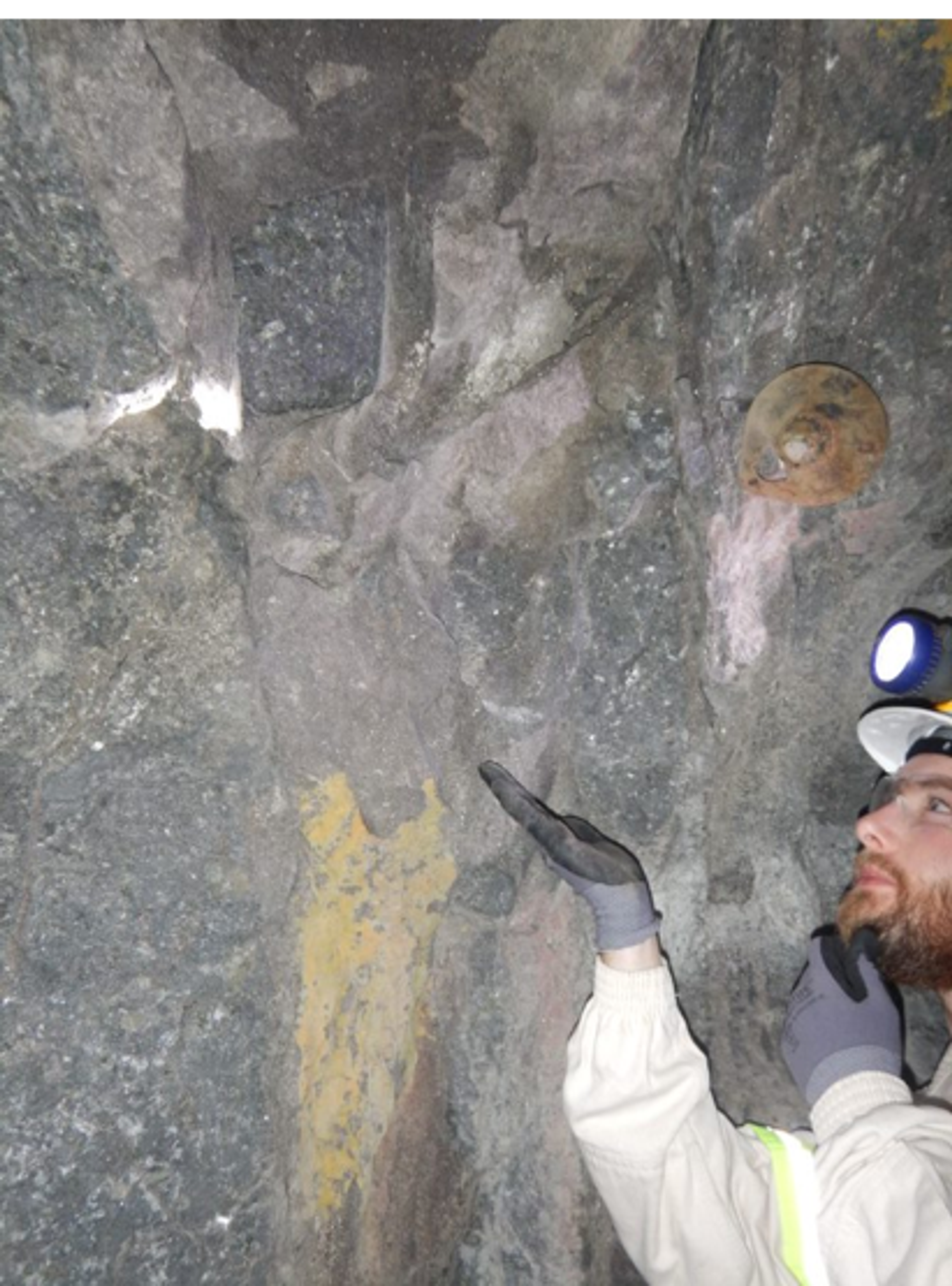
Credit: Charlie Compton-Jones
What challenges have you faced in your career?
COVID was a significant challenge during my PhD. Labwork and fieldwork was disrupted, and I had to rely on existing data rather than generating new data. This limited the scope of my research. Additionally, publishing has been difficult due to delays in data analysis and numerous other external factors.
If you had an unlimited budget for the lab, what would you do?
I’d build a state-of-the-art clean lab facility with no space restrictions and hire a full-time lab assistant. We could greatly expand upon the planned analytical capabilities and invest in range of exciting new instruments.
Are there big questions you’d like to answer in the future?
I’d love to revisit my PhD samples and analyse them with new isotope systems, like boron isotopes. It’s exciting to think about applying underused methodologies to mantle research and uncovering new insights.
If you could change one thing in science, what would it be?
The publication system. It often prioritises metrics over meaningful contributions, creating pressure to publish rather than focusing on quality. I’ve faced challenges with publishing due to factors beyond my control, which can unfairly impact career opportunities within academia.
What’s an ideal day off for you?
In summer, I enjoy road cycling and hiking. In winter, I do indoor bouldering or relax at home with music, TV, or catching up with friends.
Do you have a motto?
“Be kind to yourself.” It’s essential to avoid burnout and maintain a balance between work and life. Overworking doesn’t benefit anyone, so I always try to encourage others to prioritise taking care of themselves.
Charlie Compton-Jones is the iC3 PlasmaLab engineer, working in Tromsø, the capital of the Arctic. To find out more about the PlasmaLab, see this post or contact him by email. See here for an overview of all lab facilities at iC3.