RU4: Impact of past changes in ice
Over millions of years, the earth’s ice sheets have repeatedly expanded and retreated. To predict what the future holds, we first need to understand how past ice sheet changes affected the global carbon cycle and marine ecosystems.
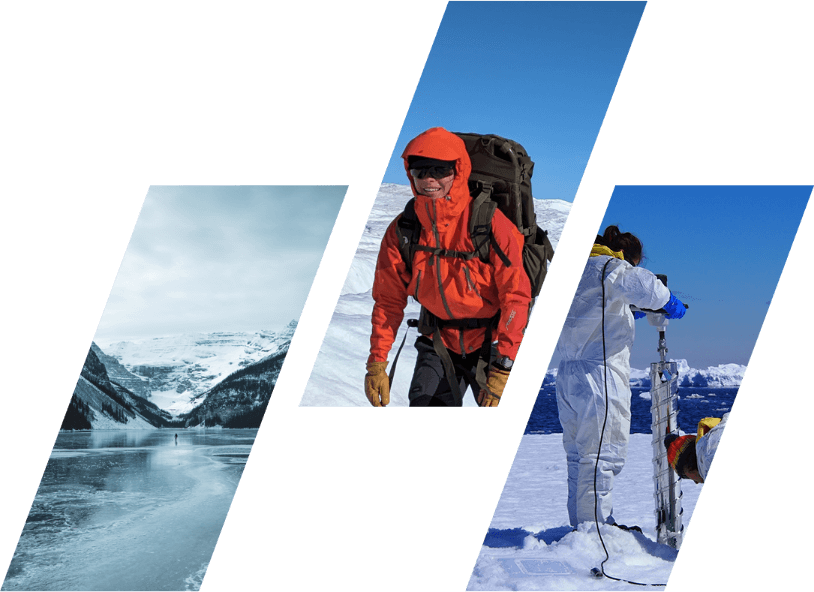
We are drilling into onshore and offshore marine sediments in Svalbard, Greenland and Antarctica and studying how past changes in ice sheets affected ocean circulation and marine life. We are combining those insights with new understanding of ice sheet behaviour gained through seismic surveys, sub-ice geophysical surveys, ice cores and sedimentary records. This enables us to reconstruct the past impact of retreating ice on life in the oceans and greenhouse gas levels in the atmosphere.
Our aim is to reliably estimate how carbon cycles and ocean ecosystems altered during past ice sheet retreat, so that we can improve our modelling of how the future may unfold.
Research Leads
Dr Jochen Knies
Research Lead
Jochen Knies is a Research Professor at UiT The Arctic University of Norway and the Geological Survey of Norway (NGU). He is a leading expert in Arctic Marine Geology with over 30 years of research experience. Currently, he serves as Research Unit lead within iC3: centre for ice, Cryosphere, Carbon and Climate, where he investigates cryosphere-carbon feedbacks during past ice sheet changes. Jochen is also a principal investigator in the European Research Commission (ERC) Synergy Grant project, “i2B – Into the Blue,” which aims to resolve Arctic greenhouse climate states from the geological past. Jochen began his Arctic research in 1991, studying ecosystem changes in the fjords of NW Svalbard. Since then, he has participated in and led numerous Arctic marine research expeditions, focusing on reconstructing the Arctic’s climate evolution from deep time to the present. His work integrates advanced methodologies, including sedimentology, geochemistry, and stratigraphy, to uncover the Arctic’s role in global climate systems. Outside of science, Jochen enjoys spending time outdoors, skiing in the winter, hiking in the summer, and engaging in cultural activities such as visiting galleries and attending operas.
Professor Andreia Plaza-Faverola
Assistant Research Lead
Andreia Plaza-Faverola is assistant research lead of the RU4 research stream within iC3. She is Professor of Marine Geophysics at the Department of Geosciences, UiT The Arctic University of Norway. She specializes in the characterization of gas hydrates and fluid migration processes. She has over a decade of experience with the acquisition, processing and interpretation of geophysical and geological data from passive and active continental margin settings. She is particularly interested in how regional processes influence sediment fracturing and the migration of fluids. Supported by starting grants from the Tromsø Research Foundation and Young Talent Frinatek, Andreia’s project SEAMSTRESS (tectonic Stress Effects on Arctic Methane Seepage) focuses on quantifying the impact of tectonic and glacially induced stress on seafloor methane emissions. She values cooperation across disciplines and likes to develop field constrained case studies for simulations of sub-seabed process interactions. Andreia originally got her PhD from UiT and then went to New Zealand for a postdoctoral fellowship at GNS Science in Wellington. She later returned to UiT to join the Norwegian Center of Excellence CAGE. She is the current leader of the group Geophysics, Glaciology and Oceanography at the university’s Department of Geosciences and also represents permanent academic staff on the faculty board.
Associate Professor Mohamed Ezat
Assistant Research Lead
Mohamed Ezat is an iC3 paleo-oceanographer and geochemist at UiT Arctic University of Norway, exploring the interactions between the cryosphere, ocean circulation, the carbon cycle, and climate dynamics in high-latitude regions. His work combines field expeditions, laboratory experiments, geochemical and micropaleontological analyses, and data–model integration to uncover how polar regions have changed over time and what these changes mean for the global climate. He leads the Foraminiferal Culturing Laboratory and the PlasmaLab for Ice, Ocean, and (Paleo)Climate, where he develops innovative methods to study paleoceanography and reconstruct past climate systems. Mohamed is actively involved in major international projects, including the ARCLIM Starting Grant, the ERC Synergy Grant i2B, and the iC3 Centre of Excellence. His research has been featured in top scientific journals and international media, such as PBS TV, The New York Times, and National Geographic. His work has revealed critical insights, such as how changes in sea ice during periods of global temperatures similar to today have significantly impacted ocean circulation and heat transport. As the leader of a collaborative and interdisciplinary research group, Mohamed welcomes inquiries from students, postdocs, and collaborators. Outside of science, he enjoys spending time with his family, exploring the outdoors, and engaging in cultural activities.
Dr Akash Trivedi
Postdoctoral researcher
Akash Srivedi is a postdoc currently focused on researching natural seepages in the North Sea, particularly within the Norwegian Channel and adjacent banks. His work is part of the EQUINOR welfare project, which aims to understand the effects of past glacial activity on subsurface dynamics. Akash analyzes seismic data to interpret subsurface architecture and assess whether nearby commercial wells are influencing or enhancing fractures in the system. This research is crucial for evaluating the stability and safety of these wells, as natural seepages can pose risks to hydrocarbon exploration and production. By studying fluid anomalies and their geotechnical aspects, his work contributes to understanding how geological processes impact industrial applications, ensuring responsible resource extraction and minimizing environmental impact. Previously, Akash pursued a PhD focusing on fluid migration and gas hydrates in polar regions, which laid the foundation for his current research interests. His academic journey began with a bachelor's degree in geoinformatics engineering, followed by work in the GIS industry, where he specialized in remote sensing and navigation applications. During his master's studies, he developed a keen interest in seismic studies and geophysics, particularly the science behind hydrocarbon production. Outside of work, Akash enjoys meditation and exploring the natural surroundings of Tromsø, Norway.
Dr Adele Westgård
Postdoctoral researcher
Adele Westgård is a researcher specialised in polar palaeoceanography, geochemistry, and marine ecology. Her research focuses on development and application of methods to study past climate variability in the polar regions, aiming to better understand the complex interactions between the ocean and the environment under the influence of warm climates. By studying past climate, particularly past warm periods and their characteristics, we can better understand the implications of ongoing climate change.
Freya Sykes
PhD student & iC3 coordinator
Freya Sykes is a marine geoscientist working at the department of Geoscience at UiT the Arctic University of Norway. Affiliated member of iC3, she delves into the impacts of climate change on the Nordic seas. Her research primarily focuses on understanding the influence of global warming on North Atlantic water masses and currents at subpolar to polar latitudes. She utilises the microscopic plankton, foraminifera by whose calcium carbonate shells record sea water properties at the time they were living. Analysing these shells can provide insight into historical climate change. This crucial work aids in predicting future climate scenarios, particularly how they might influence oceanic currents and, by extension, global climate patterns. Freya's passion for her field extends beyond the lab. She frequently participates in research cruises, gathering data firsthand and experiencing the dynamics of marine environments. This hands-on approach not only enriches her research but also fuels her love for the ocean. Outside of her professional life, Freya is a keen sailor and knitter, a practical combination for polar adventures. Whether analyzing data or navigating the seas, Freya's life is deeply intertwined with the ocean, reflecting her commitment to understanding and preserving it.
Frank Jakobsen
PhD student
Frank Werner Jakobsen is a PhD student in marine geologist at UiT with a passion for understanding the complexities of the sea floor and its geological history. Based in Trondheim, Frank is part of the Quaternary geology team at the Geological Survey of Norway (NGU), where he contributes to the Mareano program, a national initiative focused on mapping the Norwegian sea floor. His work involves collaborating with biologists and chemists to create detailed maps that aid in the management of marine resources. Frank's academic journey began in Tromsø, where he completed his bachelor's and master's degrees, with an enriching exchange experience at the University of Hawaii and at UNIS on Svalbard. His interest in quaternary geology and glacial processes led him to pursue a PhD affiliated with iC3, focusing on the glacial history of the Northeast Greenland margin. His research aims to reconstruct past ice sheets and understand how they were impacted by the environment. Beyond his professional pursuits, Frank is an avid outdoorsman, enjoying activities such as climbing, fishing, and hunting. His love for nature and adventure complements his scientific endeavors, providing a balanced and fulfilling lifestyle.
Early Career Scientists
Postdoctoral Fellowships
iC3 offers a friendly and supportive working environment to early career researchers who are passionate about polar science.