Interview: "Past climates are natural laboratories for decoding the climate system"
February 25th, 2026
In this interview, iC3 researcher Mohamed Ezat explains his work on understanding past climate interactions through paleoceanography and the use of geochemical proxies.
Can you explain what the focus of your research is and how it relates to what iC3 is doing?
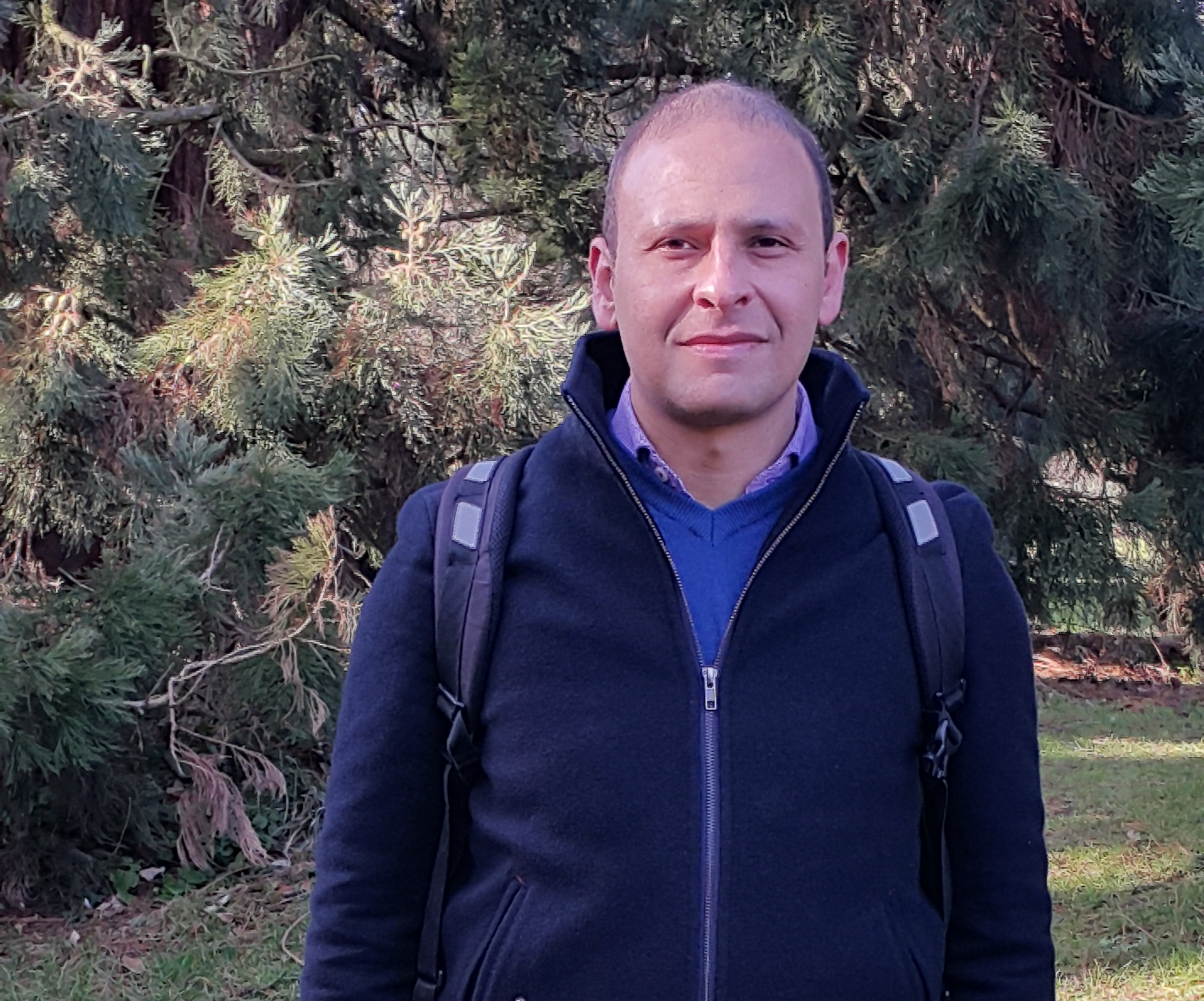
My name is Mohamed Ezat, I am an associate professor at the Department of Geosciences, and also part of the iC3 Polar Research Hub. I am a paleo-oceanographer and geochemist. My research focuses on the interactions between ice dynamics, ocean circulation, the carbon cycle, and climate in the past, spanning time scales from decades to millions of years.
The goal is to provide context for ongoing climate change and inform climate models used to project future changes.
Credit: Fatma Mohamed
How are you doing that exactly?
This is challenging because we study the past, so we can’t measure ocean parameters directly from thousands or millions of years ago. Instead, we use indirect methods called proxies. For example, geochemical proxies like the magnesium-to-calcium ratio in the shell of some marine calcifiers are sensitive to temperature. By calibrating these proxies, we can for example reconstruct past ocean temperatures.
Do you have a specific region of focus for your studies?
Yes, I focus on high-latitude regions, particularly the Nordic Seas, the subpolar North Atlantic, and the central Arctic Ocean.
Can we see similar relationships with Antarctic species?
Yes. The same methods can, in principle, be applied to records from the Southern Ocean. I often compare data from the northern areas with similar records from the Southern Ocean and elsewhere to answer my research questions.
Could you give an example of a concrete application of your work?
One example is a study we published in Nature Communications in 2024. We showed that during periods with global temperatures like today, changes in sea ice affected ocean circulation and oceanic heat transport at high latitudes.
How did you come to work in Tromsø and be affiliated with iC3?
I started my PhD here in 2011. I wasn’t initially familiar with Tromsø or the university, but I quickly fell in love with the city and the institution. iC3 offers a multidisciplinary science community, which is amazing.
My work in paleoceanography benefits from collaborations with chemical and biological oceanographers. It also provides me with an opportunity to branch out into contemporary environmental studies.
How has your research focus evolved since your PhD?
Before my PhD, I had no background in climate or paleoceanography. So that shift to the paleoceanography field during my PhD was already a big one for me.
Since then, I’ve branched out by establishing a culturing lab for foraminifera, which supports both proxy development and plankton biology research. During my PhD and the first postdoc, my research was focused on the last 150,000 years, but my research have now expanded to include high-resolution records spanning the past few centuries as well as records spanning many millions of years ago.
What technologies or methodologies excite you most in your field?
My group primarily uses mass spectrometers, and I’m excited about bringing advanced analytical tools to our new PlasmaLab laboratory. Setting up the necessary infrastructure, including clean labs and instruments, is a big process, but it’s very rewarding.
Could you explain the ARCLIM project you lead?
ARCLIM is a multidisciplinary project that combines expertise from marine ecology, geochemistry and climate modelling.
The main goal is to improve knowledge of the poorly constrained interactive feedback processes between Arctic cryosphere, the carbon cycle, the Atlantic Meridional Overturning Circulation and the regional and global climate by studying past warm periods.
Through the project, we develop robust methods to reconstruct key aspects of the Arctic freshwater system, which is crucial for understanding its impact on climate.

Credit: Evelyn Pecori
What are the biggest challenges in your research, and how do you address them?
The biggest challenge is the uncertainty associated with proxies. Some uncertainties, like analytical errors, can be constrained, but others are inherent to the proxy systems. This is why proxy development is so important.
Another challenge is ensuring our work has a tangible impact, which would require engagement with policymakers.
Could you describe a memorable moment or breakthrough in your research?
Establishing the Foraminiferal Culturing Lab was a significant moment. It was a new field for me, and I wasn’t sure it would work. But within a few months, we saw results that exceeded our expectations.
What qualities and skills do you look for in a postdoc or collaborator?
For a postdoc, I value a broad understanding of the topic and strong methodological skills. For collaborators, shared research interests and ethical alignment are important to ensure a productive and long-lasting connection.
Have you always aspired to a career in science?
I was new to climate and paleoceanography during my PhD, but over time, I became deeply attached to the field. Climate research is inspiring because it reminds us that we all, as humans, share a connected future.
How would you allocate an unlimited budget for your research?
I would first consult with my group—PhDs, postdocs, and collaborators—to understand their needs and aspirations. They are the ones doing the work, so their input would guide how the budget is allocated.
What big question would you like to answer in the future?
I want to better understand the interactions between the Arctic freshwater system and ocean circulation. Changes in the Arctic ice can significantly impact ocean circulation, climate, and the carbon cycle, but there are many knowledge gaps.
If you could change one thing in science, what would it be?
I’d like to see more emphasis on the impact of our work. It’s important to ensure that research contributes meaningfully to society and that we have ongoing conversations about its value.
What does an ideal day off look like for you?
I spend most of my time off with my wife and kids. A perfect summer day would start with a nice breakfast at home, followed by a trip to a big playground like Charlottenlund or Telegrafbukta, where we’d spend the whole day outdoors.
Could you share a book or movie that has significantly influenced you?
I watch a lot of movies, mostly Egyptian ones, but one that stands out is No Other Land, which I watched in Tromsø Aurora Cinema last year. It’s about the daily struggles of Palestinian people, and it was deeply emotional for me.
What’s one thing you’re looking forward to in the next year, personally or professionally?
Personally, I’m looking forward to learning Norwegian. Professionally, I’m excited about completing the setup of our PlasmaLab and seeing it fully operational.
Mohamed Ezat is an iC3 paleo-oceanographer and geochemist working at the UiT Arctic University of Norway. His research focuses on past climate variability and ocean circulation. He is the assistant lead of the iC3 research unit investigating how past changes in ice sheets affect the global carbon cycle and marine ecosystems, the PI of the ARCLIM project, Co-PI of the i2B project and an Associate Professor at the Department of Geosciences in Tromsø.
To find out more about his work, please check out his list of publications, or contact him by email.